AbGradE’25 Symposium in Lisbon (20th October): Registration deadline coming up!

Our signature event right before EANA 2025 (20th of October in Lisbon, Portugal) is just over 1 month away! That means that the deadline for registration is very soon, specifically this coming Sunday, 21st of September!

If you plan to attend, please remember to complete the registration form and pay the registration fee (20€) by midnight on Sunday (details are sent upon completion of the form).

We’ll soon be releasing the programme, which includes a special talk by ESA, so keep an eye on our event page.

We look forward to seeing you in beautiful Lisbon!

PhD Position in Origins of Life research at the University of Amsterdam (Amsterdam, the Netherlands)

Are you interested in a PRELIFE PhD position in prebiotic laboratory (geo/photo)chemistry?

There’s an exciting opportunity to perform research on From Building Blocks to Polymerisation on Water-rich Worlds, an Experimental Exploration. A laboratory exploration of how planet- and space-born building blocks may polymerise into molecular structures under varying prebiotic conditions, such as level of oxygenation, UV radiation, and impacts.

Do you have a MSc degree in physics, physical chemistry, geochemistry or adjacent fields? Do you like working in an interdisciplinary environment, independently and within a team? Here is your chance to do a PhD in an inspiring and challenging environment, where you will be able to perform state-of-the-art experiments and collaborate with other disciplines, scientists, PhD students, artists, and the general public.

Apply for this PhD project >here<

đź§Ş Application deadline: June 10, 2025
🌍 Start date: Autumn 2025
📍 Open to candidates worldwide

👉 Explore all PRELIFE opportunities here

Postdoctoral Opportunity at the Centre for Astrophysics and Planetary Science at the University of Kent (Canterbury, UK)

The Centre for Astrophysics and Planetary Science at the University of Kent is pleased to announce that an STFC-funded PDRA position is available within the Impact Group.

The project is titled ‘Exploring the fundamentals of impact capture to maximise future dust collections’ and will make use of the Impact Group’s two-stage light gas gun facility to explore the most appropriate methods to collect cosmic dust for three mission scenarios relating to space mission/experiment concepts currently in development:

  • The collection of dust from the volcanic plumes of Io
  • The collection of dust from icy plumes of Enceladus
  • The opportunistic collection of dust in the Near-Earth environment by space hardware

The successful candidate will work with an interdisciplinary team led by Dr Penny Wozniakiewicz, which covers physics, planetary science, chemistry and biosciences. They will use a range of analytical instrumentation, including optical and electron microscopes, GC-MS, MP-AES and Raman spectroscopy to assess the performance of different available capture media.

They will also join our active external collaborations with members of the Io and Enceladus dust sampling mission concept teams, providing key underpinning data for these and future mission concepts.

The closing date for applications is Monday 9th June, with interviews to be held the week starting 16th June.

For further information and details on how to apply, please click here.

Alternatively, if you have any questions, please don’t hesitate to contact Dr Penny Wozniakiewicz.
Conference: EANA 2025 in Lisbon, Portugal (October 21-24)

Registration Open!
The 25th European Astrobiology Network Association (EANA) conference will take place in person at Instituto Superior Técnico in Lisbon, Portugal, from 21–24 October 2025.

Join researchers from across Europe for keynote and contributed talks, the Space Factor contest, and poster sessions. This year’s theme is “Astrobiology: From the Field to the Labs and into Space,” but abstracts from all areas of astrobiology are welcome!

đź“§ Questions? Contact: eana-conference (at) eana-net.eu

> More info here <

Applications open: SPACE INDUSTRY WORKSHOP in Riga (Latvia)


Are you a student or academic interested in space science and industry collaboration? Join the Erasmus+ Blended Intensive Programme (BIP) hosted by Riga Technical University, in partnership with Aalto University and Stockholm University.

📅 In-person workshop: August 18–22, 2025 (Riga, Latvia)
đź’» Virtual follow-up: 3 days post-workshop
🎯 Collaborate with space scientists, startups, and industry leaders on real mission design proposals
🎓 Earn 3 ECTS · No participation fees · Erasmus+ mobility funding available

📝 Deadline to apply: May 31, 2025
👉 Apply here

PhD Positions in Origins of Life Research (several locations in the Netherlands)

Curious about how life began—and where it might arise beyond Earth? PRELIFE is a new European doctoral network offering 15 fully funded PhD positions across disciplines like geochemistry, synthetic biology, complex systems, and astrobiology.

From simulating early Earth to building synthetic life, each project tackles a different piece of the puzzle.

đź§Ş Application deadline: June 10, 2025
🌍 Start date: Fall 2025
📍 Open to candidates worldwide

👉 Explore all opportunities here

PhD Opportunity in Space Microbiology at ZARM (University of Bremen, Germany)

Are you passionate about space and microbiology? The Center of Applied Space Technology and Microgravity (ZARM) at the University of Bremen is looking for a motivated PhD researcher to join the ERC-funded MarCyano project. This 3-year position offers the chance to explore how cyanobacteria could help sustain future human missions to Mars — by producing oxygen, food, and other essentials using Martian resources.

Who can apply?
If you have (or are about to complete) a Master’s in Microbiology, Molecular Biology, or a related field, and you’re excited about space research and hands-on lab work, this could be a great fit!

Location: Bremen, Germany
Deadline to apply: June 1, 2025
Find out more and apply: Click here

Postdoctoral Opportunity in Astrobiology at the Centro de AstrobiologĂ­a (CAB, Madrid, Spain)

The Centro de AstrobiologĂ­a (CAB) is looking for a Postdoctoral Researcher to join the Lipid Biomolecules in Planetary Exploration group. This 1.5-year position (starting around September 2025) is part of the ExPresBio project, which investigates the preservation of lipid biomarkers under astrobiology-relevant conditions, including Martian-like radiation environments.

Who should apply?
PhDs in Astrobiology, Geoscience, Environmental Science, Biogeochemistry, or Organic Geochemistry with skills in radiation experiments, GC-MS, IRMS, and data analysis (e.g., R, Python).

Location: TorrejĂłn de Ardoz, Madrid, Spain.
Apply by sending your CV and motivation letter to:
lsanchez (at) cab.inta-csic.es

More details can be found here

“Impacts and their role in the origin and evolution of life” Conference (1-4 September 2025, Nördlingen, Germany)

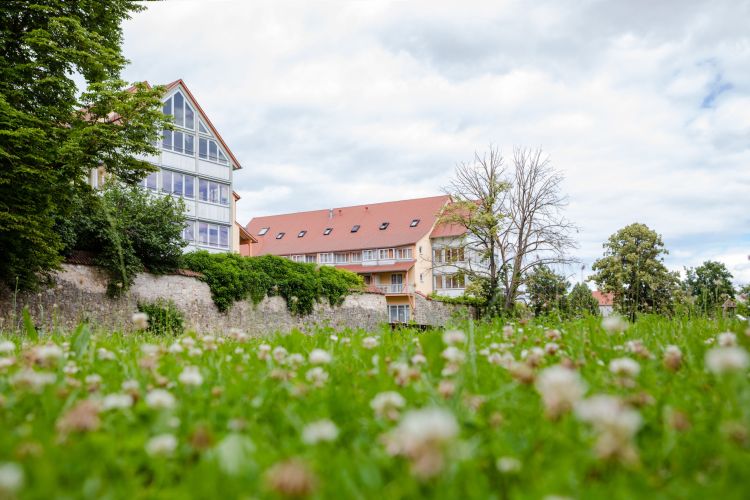
We are pleased to share an exciting invitation to the conference, “Impacts and their role in the origin and evolution of life” which will be held from 1 to 4 September 2025 in the picturesque medieval city of Nördlingen, located within the world-famous Ries crater in southern Germany.

The conference will focus on the role of meteorite and comet impacts in the formation of Earth, its atmosphere, and the evolution of life. The event will feature lectures, discussions, and excursions, allowing participants to present their research during poster sessions.

Conference topics include:

  • Impacts and the early history of the Solar System
  • Impact structures as indicators of target properties
  • Role of impacts in the delivery and formation of the building blocks for life
  • Impact-generated habitats for life
  • Environmental effects of impacts
  • Impacts as threats to life and humankind
  • Geoconservation, education, and outreach related to impacts

There will be two exciting excursions:

  • A one-day excursion around the Ries crater on 4 September
  • A half-day excursion to the Steinheim crater on 2 September, including its famous central uplift feature

Additionally, the conference will offer time for contributed talks, with a special focus on young scientists.

Important Dates:

  • Abstract Submission Deadline: 31 May 2025
  • Registration Deadline: 30 June 2025

For full details and to register, please visit the official website

PhD Opportunity: Studying Biosignatures Under Martian Irradiation in OrlĂ©ans (France)

A PhD position at CNRS in Orléans, France, offers a unique opportunity to investigate how biosignatures survive in the harsh environment of Mars.

Mars was once habitable, with liquid water on its surface, but over time, its atmosphere thinned, and radiation exposure increased. Despite this, ancient rocks on the Martian surface might still hold evidence of past microbial life. This PhD project will explore how cosmic radiation affects these biosignatures over billions of years, helping refine the search for life on Mars—especially for upcoming missions like ESA’s ExoMars.

The research involves using a particle accelerator (CEMHTI Pelletron) to simulate Martian irradiation, analyzing how different minerals protect biosignatures, and collaborating with space mission teams. It’s a fantastic chance to contribute to astrobiology and planetary exploration.

đź“… Application deadline: March 14
📍 Location: CNRS, Orléans, France

đź”— More details & application: CNES Website

For further inquiries, feel free to reach out to Dr. Frédéric Foucher.