Exploring Otherness on Earth and Beyond: Bridging the Gap Between Natural Sciences, Social Sciences, and Humanities – April 9-11 2025 in Berlin, Germany

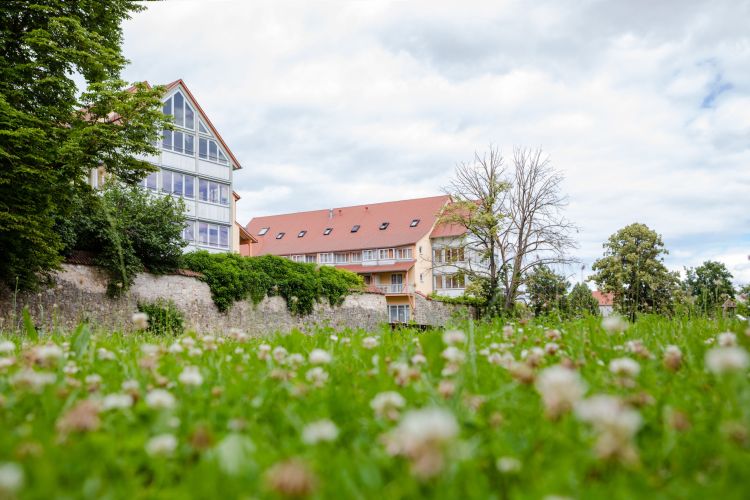
The upcoming conference, “Exploring Otherness on Earth and Beyond: Bridging the Gap Between Natural Sciences, Social Sciences, and Humanities,” will take place at Freie Universität Berlin (campus Lankwitz) from April 9 to 11, 2025. This event, funded by the European Astrobiology Institute and the Einstein Foundation, aims to explore the concept of otherness through the lenses of various disciplines and foster a multidisciplinary dialogue.

The conference will feature sessions on:

  • Other Life: Search for alien life
  • Other Worlds: Colonization of the Moon and Mars
  • Other Earth: Alien environments and human catastrophes
  • Philosophical and theological views on otherness
  • Communication science and psychology

With a planned attendance of approximately 50 participants, the conference will include a mix of invited and contributed oral presentations. Participation is by application and invitation, and early registration is recommended. A limited budget is available for partial travel support.

Registration, including abstract submissions, will close on Wednesday February 5 2025. The organizing committee may need to limit participation based on the number of applications. Registered participants will be notified about their status shortly after the registration deadline.

The full conference announcement is available >>here<<.

The conference is organized by members of an Einstein circle in collaboration with the European Astrobiology Institute. For any inquiries, please contact Christoph Gross.

FALCON: Frontiers in Astrobiology and Origins of Life Conference in Reykjavik, Iceland 

✨ Seasons Greetings ✨

We are excited to announce our very first event in collaboration with the Origin of Life Early-career Network (OoLEN):
FALCON: Frontiers in Astrobiology and Origins of Life Conference

Taking place in Reykjavik (Iceland🌋) on June 26-29 2025, this meeting will precede the BEACON conference.

At the moment, we are asking all interested people to record their interest by filling out this form.

🇮🇸We look forward to seeing you soon!🇮🇸

Third IAGC International Conference on Water-Rock Interaction & Applied Isotope Geochemistry (16-21 June 2025)

📅 When: 16-21 June 2025
📍 Where: Cagliari, Sardinia
❗ Registration Deadline: 31 December 2024

Get ready for an exciting gathering of global experts and researchers at the Third IAGC International Conference on Water-Rock Interaction (WRI-18) and Applied Isotope Geochemistry (AIG-15). It’s a chance to explore the latest breakthroughs, share ideas, and connect with a worldwide community.

Why attend?
🔹 Network with experts — Build connections and spark collaborations.
🔹 Showcase research — Present your work and explore opportunities for publication.
🔹 Experience Sardinia — A stunning backdrop of beaches, mountains, and rich cultural heritage.

While you’re there, take time to soak in Sardinia’s natural beauty, explore its ancient ruins, and experience its vibrant local traditions.

Check out the event details >>here<< and register online!

5th British Planetary Science Conference in 2026 at the University of St Andrews

The University of St Andrews has been selected to host the 5th British Planetary Science Conference in 2026! The selection was made by a panel consisting of members of UKPF and organisers of BPSC2024 following an open call for applications.

BPSC2026 will take place in early June 2026. Stay tuned for more information, including specific dates, which will be communicated on the website [ukpf.org.uk] in due course.

Dr Paul Savage (U. St Andrews) has said the following on behalf of the BPSC2026 local organising committee: “We’re honoured to have been chosen to host BPSC 2026 in St Andrews. We’re looking forward to seeing you all here and providing a platform to show off the scientific achievements in the UK Planetary Science community. We hope everyone will feel welcome in our small corner of Scotland.”

Spring School “The birth of Solar Systems” – registration deadline approaching

The deadline for the registration to the Spring School “The birth of Solar Systems” organised by the European Astrobiology Institute and the COST Action ”The Birth of Solar Systems” (CA22133) in in 2 days (November 30th)!


As a reminder, the school will be held in Bertinoro (Italy)  25 February – 6 March 2025

The event is aimed for graduate (masters and PhD) students and early career scientists. Senior scientists and citizen scientists are also eligible but have lower priority. The event is open to applicants from all nationalities.

Bursaries are available for researchers and students from almost all European countries (See a list at: https://www.cost.eu/actions/CA22133/#tabs+Name:Management%20Committee).

TPlease find all the information about the spring school at the website: https://europeanastrobiology.eu/the-birth-of-solar-planets-summer-school-homepage/

Spring School “The birth of Solar Systems” (Bertinoro, Italy,  25 February – 6 March 2025)

The European Astrobiology Institute and the COST Action ”The Birth of Solar Systems” (CA22133) will organise

Spring School “The birth of Solar Systems”
“Evolution, observation and modelling of protoplanetary disks and planet formation”
Bertinoro, Italy,  25 February – 6 March 2025

The school will be held in very nice settings at the Bertinoro Castle, close to Bologna, overlooking the Padanian valley during the blooming of the cherry and peach trees in the quaint small town of Bertinoro.

The school will consist of the following parts:

  • Introductory talks into the basic issues of the course subjects by participants
  • Lectures by leading researchers on
    • Formation of stars and planetary systems
    • Formation and early evolution of protoplanetary disks
    • Late stages of protoplanetary disks and formation of planets
  • Practical exercises working with data from the Atacama Large Millimetre Array (ALMA)
  • Poster sessions

The event is aimed for graduate (masters and PhD) students and early career scientists. Senior scientists and citizen scientists are also eligible but have lower priority. The event is open to applicants from all nationalities.

Bursaries are available for researchers and students from almost all European countries (See a list at: https://www.cost.eu/actions/CA22133/#tabs+Name:Management%20Committee).
These bursaries will cover:

  • Travel to and from the venue by economy class flight and/or equal surface transport
  • Accommodation during the summer school (24 February evening – 7 March morning) at the course venue
  • Meals (breakfasts, lunches, dinners) from dinner on 24th February until breakfasts on 7th March
  • Coffee breaks
  • Excursions

The application deadline is 30th November 2024. Please find all the information about the spring school at the website: https://europeanastrobiology.eu/the-birth-of-solar-planets-summer-school-homepage/

UKPF Early Career Meeting (United Kingdom), January 13 2025

We’re pleased to announce that registration is now open for the 18th UKPF Early Career Meeting (ECM), which will be held on Monday, 13 January 2025 at the Martin Wood Lecture Theatre, Clarendon Laboratory, University of Oxford.

The UKPF ECM is designed to bring together early career researchers from across the UK for a day of networking and knowledge sharing. This event provides a supportive environment for early career scientists to present their research to peers and receive constructive feedback, offering valuable preparation for larger, international conferences. Presentations will include both talks and posters, showcasing the diversity of work taking place in planetary science. We welcome contributions from all aspects of planetary science, including but not limited to; planetary surfaces, atmospheres and magnetospheres, habitability & astrobiology, meteorites, planets and their moons.

Date: 13 January 2025
Location: Martin Wood Lecture Theatre, Clarendon Laboratory, University of Oxford, Parks Road, Oxford, OX1 3PU
Cost: Completely free!
Registration Link: Register Here
Abstract Submission Deadline: Friday, 6 December 2024 (23:59)
Abstract Submission: Abstracts should be uploaded via the registration form. Please use the UKPF2025 abstract template as a guide.

Attendees are encouraged to join in person, but virtual attendance will also be offered for those unable to travel.

For enquiries regarding accessibility, registration or abstract submission, please contact us at ukpf2025@physics.ox.ac.uk or duncan.lyster@physics.ox.ac.uk. For more information please check out our website: https://www.ukpf.org.uk/ukpf-early-career-meeting.html

Planet Mars VI workshops in Les Houches (France), March 30 – April 4 2025

Planet Mars VI will be the sixth edition of a series of workshops which has taken place at the Les Houches School of Physics (French Alps) since 2003. These workshops are organized to bring together senior scientists, junior scientists, postdocs and PhD students in order to optimize the analysis and interpretation of space data, and to prepare the community for the best exploitation of forthcoming missions. Leading Mars scientists in the interpretation of data and modelling will present their views on key topics, from the deep interior to the ionosphere of Mars, as well as Phobos science.

> The deadline for registration is November 29, 2024 <
Workshop information can be found >>here<<

Please note the number of spaces is limited to 70, and early career researchers are especially encouraged to attend.

Online public outreach event: ‘Exoplanets and the Ariel Mission – Searching for signatures of life on strange worlds’ on October 31st

The Centre for Planetary Sciences at UCL/Birkbeck is delighted to announce the next event in their free ‘Adventures in Planetary Science’ public engagement series ‘Exoplanets and the Ariel Mission – Searching for signatures of life on strange worlds’, taking place on Thursday 31st Octoberfrom 5:30pm GMT. This will be a virtual event held online with Zoom.

It is estimated that our own Milky Way Galaxy is home to at least 100 billion planets and, with over 5700 detected over the past few decades, these strange new worlds orbiting other stars have become an important and fascinating area of scientific study.  Join to hear from exoplanet and astrobiology experts about how we explore these alien planets and what they could reveal about the search for life beyond Earth. Since it’s Halloween, they’ll be sharing some details of the many “horrifyingly inhospitable” exoplanets discovered so far!  You can also dive a little deeper into the bewitching world of exoplanets by putting your questions to the panel during the Q&A following the talks.

The event will feature talks from Professor Giovanna Tinetti (UCL, Head of Astrophysics Group and Ariel Mission Science Lead), Dr Andrew Rushby (Birkbeck, Lecturer in Astrobiology and co-host of the ExoCast podcast), Alex Thompson (UCL, PhD researcher in exoplanets and founder of the Orbyts STAR programme) and Dr Gordon Yip (UCL, post doctoral researcher in exoplanets and machine learning techniques, Lead of the Ariel Data Challenge). Dr Catherine Regan (West Virginia University, post-doctoral researcher in planetary science and recent winner of the IoP Jocelyn Bell Burnell medal for exceptional early-career contributions to physics by a female physicist) will be the host for the evening.

Don’t miss out! Register for your free tickets on Eventbrite now:  https://CPS-exoplanets.eventbrite.co.uk

For further information about the event please see the event webpage.