PhD in Experimental Microbial Ecology

Fully funded PhD position
The National Centre of Competence in Research NCCR Genesis is a research infrastructure project funded by SNSF focussing on exploring the emergence of life in the Universe. This interdisciplinary research infrastructure brings together physicists, earth and planetary scientists, chemists and biologists to understand the conditions and the mechanisms that enable life to emerge. Developing reliable methods to detect reliable traces of life (biosignatures) – whether through remote sensing or direct onsite measurements – requires significant innovation. These challenges demand close collaboration across physics, biology, chemistry and the earth sciences. NCCR Genesis does not aim
to provide answers in all fields, but to drive innovative research and achieve decisive progress.


Details on NCCR Genesis are available on its website https://nccr-genesis.ch.

Position Overview

The Institute of Earth Sciences (ISTE) at the University of Lausanne invites applications for a PhD position in experimental microbial ecology within the framework of the NCCR Genesis.
The successful candidate will work under the joint supervision of Dr. Alice Bosco Santos (UNIL) and Dr. Nicola Storelli (SUPSI).

Project Overview

This PhD project will develop controlled experimental systems to investigate top-down and bottom-up ecological strategies that directly shape the biosignatures of sulfur-cycling bacteria
in low-oxygen environments. The main focus will be on virus–host interactions in purple (PSB) and green (GSB) sulfur bacteria related to the microbial anoxic communities of meromictic Lake Cadagno. The work will combine laboratory-based experiments at UNIL (Lausanne) and SUPSI (Mendrisio) with field observations in stratified aquatic environments (e.g., meromictic lakes), particularly during June-October. The candidate will generate the empirical foundation needed to quantify how viral perturbations affect microbial metabolism and biogeochemical outputs.


Key Responsibilities:

  • Monitoring and Isolation of viruses from the natural environment
  • Infection test with different anoxygenic phototrophic sulfur bacteria
  • Conduct anaerobic microbiology work, such as maintaining cultures of anaerobic phototrophic sulfur bacteria, designing and performing experiments under controlled redox gradients (e.g., microfluidics, mesocosms).
  • Characterize microbial responses using: flow cytometry, viability assays (e.g., live/dead staining), microscopy and spatial analysis
  • Develop and apply molecular approaches: qPCR quantification, RNA extraction, and transcriptomics preparation
  • Organize and participate in field monitoring campaigns in Lake Cadagno, Ticino, Switzerland
  • Contribute to data integration with computational collaborators

Candidate Profile
A motivated candidate with a strong interest in environmental
microbiology and geomicrobiology. A master’s (or equivalent) degree in microbiology, environmental sciences, biology, or a related field is preferred. Candidates with an interest in microbial ecology and biogeochemistry and a motivation for fieldwork in lake environments are encouraged to apply.


Working Environment
The candidate will be based at the University of Lausanne within a dynamic, interdisciplinary research environment and will collaborate closely with SUPSI. Time at SUPSI for training and
analysis will be necessary (especially from June to October). The project is embedded in the NCCR Genesis, offering access to a broad network of researchers working on biosignatures, microbial processes, and planetary habitability.


What is Offered

  • A fully funded PhD position in Switzerland
  • Interdisciplinary training across microbiology, biogeochemistry, and biosignatures
  • Opportunities for fieldwork in unique natural systems
  • Collaboration within a national research network (UNIL, SUPSI, EPFL)
  • A supportive and collaborative research environment within the NCCR Genesis

Application

Applications should be sent to alice.boscosantos@unil.ch and include:

  • CV
  • Motivation letter
  • Contact details of 2–3 referees
  • The position is expected to start in Fall 2026. The application deadline is August 5, 2026.
  • Interviews will be conducted between August 15 and 20, 2026

PhD in Quantitative Microbial Biosignatures and Statistical Biophysics

Fully funded PhD position
The National Centre of Competence in Research NCCR Genesis is a research infrastructure project funded by SNSF focussing on exploring the emergence of life in the Universe. This interdisciplinary research infrastructure brings together physicists, earth and planetary scientists, chemists and biologists to understand the conditions and the mechanisms that enable life to emerge. Developing reliable methods to detect reliable traces of life (biosignatures) – whether through remote sensing or direct onsite measurements – requires significant innovation. These challenges demand close collaboration across physics, biology, chemistry and the earth sciences. NCCR Genesis does not aim
to provide answers in all fields, but to drive innovative research and achieve decisive progress.


Details on NCCR Genesis are available on its website https://nccr-genesis.ch.

Position Overview

The Institute of Earth Sciences (ISTE) at the University of Lausanne invites applications for a PhD position in computational biosignatures and quantitative modeling within the framework of the NCCR Genesis. The successful candidate will work under the joint supervision of Alice Bosco Santos (UNIL) and Paolo De Los Rios (EPFL).

Project Overview

This PhD project aims to quantify how viral perturbations of microbial metabolism translate into measurable biosignatures in low-oxygen environments.
Focusing on sulfur-cycling microbial communities (e.g., purple sulfur bacteria and associated viruses), the project will combine bioinformatics, quantitative modeling, and experimental data integration to identify key metabolic control points targeted by viruses and evaluate how their perturbation propagates through microbial and biogeochemical systems, producing detectable shifts in biosignatures (e.g., isotopic fractionation, pigment production).

Key Responsibilities:

  • Analyze multi-omics datasets:
    o metagenomics
    o metatranscriptomics
    o viromes and auxiliary metabolic genes (AMGs)
  • Identify metabolic pathways (KEGG pathways) and rate-limiting steps targeted by viruses
    Develop quantitative models to:
    o simulate microbial metabolic networks
    o quantify the impact of viral perturbations
    o estimate thresholds for detectable biosignature shifts
  • Integrate experimental data into modeling
  • Contribute to the interpretation of carbon and sulfur cycling
  • Participate in field campaigns to gain familiarity with the systems studied
  • Possibility to participate in laboratory experiments (e.g., gene expression analyses) to validate and parameterize quantitative models

Candidate Profile
A motivated candidate interested in the intersection of biology, physics, and Earth sciences, with a strong inclination toward computational approaches.

Required:

  • MSc (or equivalent) in bioinformatics, computational biology, physics, environmental sciences, or related field
  • Strong interest in quantitative analysis and modeling
  • Programming skills
  • Ability to work at the interface of disciplines
  • Interest in linking models to experimental data

Working Environment
The candidate will be based at the University of Lausanne and will collaborate closely with EPFL. The project offers a highly interdisciplinary environment at the interface of microbial ecology, physics, and Earth sciences.
The position is embedded within the NCCR Genesis, providing access to a broad network of researchers working on biosignatures, planetary habitability, and the detection of life beyond Earth.

What is Offered

  • A fully funded PhD position in Switzerland
  • Training at the interface of microbiology, physics, and Earth sciences
  • Opportunities to develop both computational and experimental skills
  • Collaboration within a national research network (UNIL, EPFL, SUPSI, UNIGE, ETH)
  • A supportive and interdisciplinary research environment within the NCCR Genesis

Application

Applications should be sent to alice.boscosantos@unil.ch and include:

  • CV
  • Motivation letter
  • Contact details of 2–3 referees
  • The position is expected to start in Fall 2026. The application deadline is August 5, 2026.
  • Interviews will be conducted between August 15 and 20, 2026

EAI Summer School in Iceland: Biosignatures and the Search For Life on Mars (and other planets)

18 to 26 June, 2026

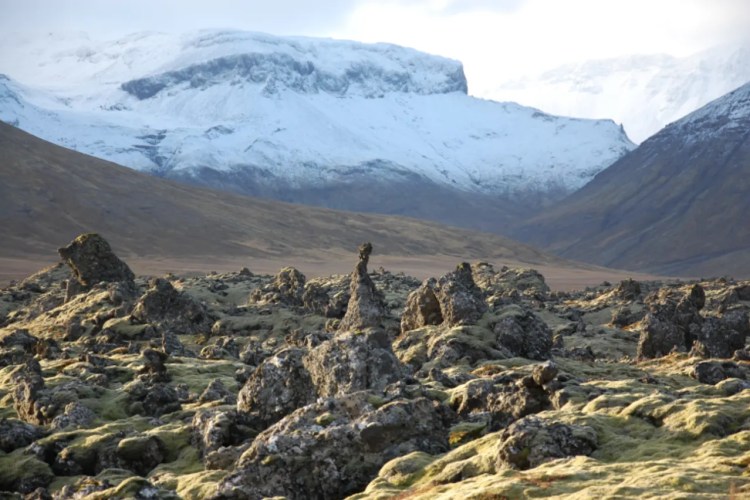
The school aims to cover the subject of the search for life in different environments, both on early Earth, below Earth’s surface and on Mars. It will bring together students and researchers from a multitude of different fields. It is co-organised by the European Astrobiology Institute,  the University of Akureyri and Stockholm University. Field studies on the colonisation of lava fields and Mars analogue landscapes will complement the lectures. The programme of the summer school comprises:

  • lectures by internationally leading scientists covering a broad range of subjects in astrobiology
  • investigation of colonisation Mars analogue landscapes with in situ life detection techniques
  • excursions to geologically and astrobiologically interesting sites (lava caves, new lava fields):
    • Námaskarð geothermal area
    • Krafla volcanic area
    • the Mars analogue landscapes in Northern Iceland
    • the Myvatn area with the Skútustaðir pseudocraters and the Hverfjall cinder cone
  • a poster sessions for students and early career scientists
  • participant-led discussions

A multitude of highly merited researchers have agreed to teach at the course (see the Programme page for details. The deadline for application is 15 April 2026 23:59:00 UTC.

The school is open for students amd scientists from all countries. For further information please click here.

See you in Iceland in June!

EAI Summer School in Iceland: Biosignatures and the Search For Life on Mars (and other planets)

18 to 26 July, 2026

The school aims to cover the subject of the search for life in different environments, both on early Earth, below Earth’s surface and on Mars. It will bring together students and researchers from a multitude of different fields. It is co-organised by the European Astrobiology Institute,  the University of Akureyri and Stockholm University. Field studies on the colonisation of lava fields and Mars analogue landscapes will complement the lectures. The programme of the summer school comprises:

  • lectures by internationally leading scientists covering a broad range of subjects in astrobiology
  • investigation of colonisation Mars analogue landscapes with in situ life detection techniques
  • excursions to geologically and astrobiologically interesting sites (lava caves, new lava fields):
    • Námaskarð geothermal area
    • Krafla volcanic area
    • the Mars analogue landscapes in Northern Iceland
    • the Myvatn area with the Skútustaðir pseudocraters and the Hverfjall cinder cone
  • a poster sessions for students and early career scientists
  • participant-led discussions

A multitude of highly merited researchers have agreed to teach at the course (see the Programme page for details. The deadline for application is 15 April 2026 23:59:00 UTC.

The school is open for students amd scientists from all countries. For further information please click here.

See you in Iceland in June!

Fully funded PhD studentships at the University of Stirling (Scotland, UK)

Fully funded PhD studentships in the realm of astrobiology and Mars exploration are available within the Earth and Planetary Observation Research Group at the University of Stirling.

  1. Preservation of Organic Carbon Compounds and Potential Biosignatures by Reactive Iron Minerals on Mars (guaranteed funding from the UK Space Agency).
  2. Carbon sequestration processes in the rusty carbon sink (competition-funded through UKRI NERC DTP Iapetus).

>> Start of programme: 1st of October 2024 <<
>> Deadline: 5th of January 2024 <<

Please contact Dr Christian Schroeder for further details and how to apply.