EAI spring school in Czechia: Tracking the evolution of planetary systems and planets

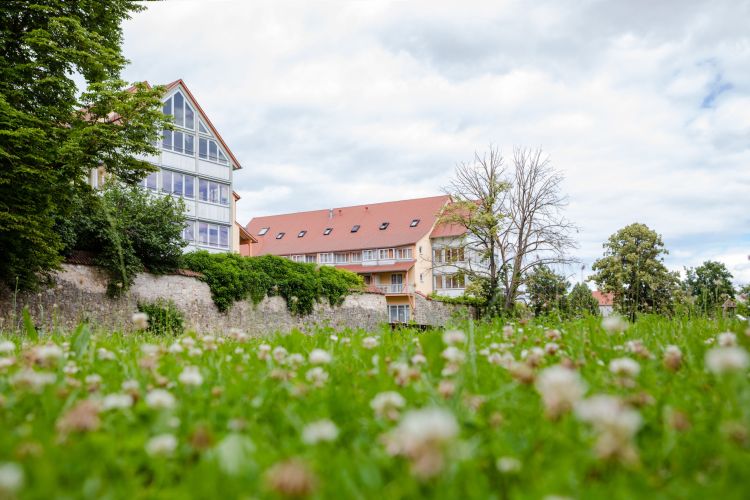
The spring school “Tracking the evolution of planetary systems and planets” which is co-organised by the COST Action “The birth of solar systems and the European Astrobiology Institute (EAI) will be taking place from 15th to 22nd April 2026 at Liblice Castle, Czechia. It aims to give attendees a thorough introduction into the formation of protoplanetary disks, planetary systems and planets with the focus on observational, experimental and theoretical methods to investigate the associated processes. Bursaries are available for early career scientists from most European countries (not only from EU countries, see a list here) covering the vast majority of costs for meals and accommodation aare available.

The lectures will cover the following programme points:

  • Main physical and chemical processes in the evolution of protoplanetary disks and early planetary systems
  • Molecules and the dynamic evolution of discs and planetary systems
  • The role of grains and ices in protoplanetary disks and their evolution
  • Observation of grains and ices in protoplanetary disks
  • Formation of planets via accretion
  • Planet-disc interaction
  • Molecular abundance in protoplanetary discs and dependence on different parameters
  • Laboratory methods investigating chemical processes relevant under planet formation
  • Modelling of reaction networks in planet formation
  • Atomic and molecular spectra (IR and optical) for astronomic observations
  • Evolution and chemistry of exoplanet atmospheres
  • Molecular observations of exoplanet atmospheres
  • Architecture of exoplanetary systems from the perspective of observer

Other programme points include:

  • Using JWST observations of molecules in disks and exoplanets as indicators of properties of disks and planets

  • Poster sessions

  • Discussions

  • Excursion: Prague for astronomers
Application deadline is 15 January 2026. Check out the school website for further information https://europeanastrobiology.eu/spring-school-tracking-the-evolution-of-protoplanetary-disks-home/

“Impacts and their role in the origin and evolution of life” Conference (1-4 September 2025, Nördlingen, Germany)

We are pleased to share an exciting invitation to the conference, “Impacts and their role in the origin and evolution of life” which will be held from 1 to 4 September 2025 in the picturesque medieval city of Nördlingen, located within the world-famous Ries crater in southern Germany.

The conference will focus on the role of meteorite and comet impacts in the formation of Earth, its atmosphere, and the evolution of life. The event will feature lectures, discussions, and excursions, allowing participants to present their research during poster sessions.

Conference topics include:

  • Impacts and the early history of the Solar System
  • Impact structures as indicators of target properties
  • Role of impacts in the delivery and formation of the building blocks for life
  • Impact-generated habitats for life
  • Environmental effects of impacts
  • Impacts as threats to life and humankind
  • Geoconservation, education, and outreach related to impacts

There will be two exciting excursions:

  • A one-day excursion around the Ries crater on 4 September
  • A half-day excursion to the Steinheim crater on 2 September, including its famous central uplift feature

Additionally, the conference will offer time for contributed talks, with a special focus on young scientists.

Important Dates:

  • Abstract Submission Deadline: 31 May 2025
  • Registration Deadline: 30 June 2025

For full details and to register, please visit the official website

Summer School “Traces of Early Life” (3-13 June 2025 in Stirling, Scotland)

Are you passionate about the origins of life and the search for extraterrestrial life? Join the European Astrobiology Institute’s “Traces of Early Life” Summer School, held from 3rd to 13th June 2025, at the picturesque Stirling University in Scotland. Surrounded by the stunning landscapes of Loch Ness, Ullapool, and Durness, this unique programme offers an immersive opportunity to explore the evolution of early Earth, the origins of life, and cutting-edge methods for detecting ancient lifeforms. Engage with world-leading researchers through lectures, hands-on practical exercises, and a 5-day field excursion to geologically fascinating sites.

The school will include

  • 4 days of lectures
  • excursion to stromatolite sites and other geologically interesting locations a the stunningly beautiful North Coast of Scotland
  • practical exercises
  • poster sessions

Whether you’re a graduate student, early-career scientist, or senior researcher, this summer school provides an exciting platform to expand your knowledge and network with experts in the field. Apply now for an unforgettable experience in one of the world’s most beautiful regions!

See details >>here<<

Application deadline is 1st of March 2025!

Third IAGC International Conference on Water-Rock Interaction & Applied Isotope Geochemistry (16-21 June 2025)

📅 When: 16-21 June 2025
📍 Where: Cagliari, Sardinia
❗ Registration Deadline: 31 December 2024

Get ready for an exciting gathering of global experts and researchers at the Third IAGC International Conference on Water-Rock Interaction (WRI-18) and Applied Isotope Geochemistry (AIG-15). It’s a chance to explore the latest breakthroughs, share ideas, and connect with a worldwide community.

Why attend?
🔹 Network with experts — Build connections and spark collaborations.
🔹 Showcase research — Present your work and explore opportunities for publication.
🔹 Experience Sardinia — A stunning backdrop of beaches, mountains, and rich cultural heritage.

While you’re there, take time to soak in Sardinia’s natural beauty, explore its ancient ruins, and experience its vibrant local traditions.

Check out the event details >>here<< and register online!

Spring School “The birth of Solar Systems” – registration deadline approaching

The deadline for the registration to the Spring School “The birth of Solar Systems” organised by the European Astrobiology Institute and the COST Action ”The Birth of Solar Systems” (CA22133) in in 2 days (November 30th)!


As a reminder, the school will be held in Bertinoro (Italy)  25 February – 6 March 2025

The event is aimed for graduate (masters and PhD) students and early career scientists. Senior scientists and citizen scientists are also eligible but have lower priority. The event is open to applicants from all nationalities.

Bursaries are available for researchers and students from almost all European countries (See a list at: https://www.cost.eu/actions/CA22133/#tabs+Name:Management%20Committee).

TPlease find all the information about the spring school at the website: https://europeanastrobiology.eu/the-birth-of-solar-planets-summer-school-homepage/

Spring School “The birth of Solar Systems” (Bertinoro, Italy,  25 February – 6 March 2025)

The European Astrobiology Institute and the COST Action ”The Birth of Solar Systems” (CA22133) will organise

Spring School “The birth of Solar Systems”
“Evolution, observation and modelling of protoplanetary disks and planet formation”
Bertinoro, Italy,  25 February – 6 March 2025

The school will be held in very nice settings at the Bertinoro Castle, close to Bologna, overlooking the Padanian valley during the blooming of the cherry and peach trees in the quaint small town of Bertinoro.

The school will consist of the following parts:

  • Introductory talks into the basic issues of the course subjects by participants
  • Lectures by leading researchers on
    • Formation of stars and planetary systems
    • Formation and early evolution of protoplanetary disks
    • Late stages of protoplanetary disks and formation of planets
  • Practical exercises working with data from the Atacama Large Millimetre Array (ALMA)
  • Poster sessions

The event is aimed for graduate (masters and PhD) students and early career scientists. Senior scientists and citizen scientists are also eligible but have lower priority. The event is open to applicants from all nationalities.

Bursaries are available for researchers and students from almost all European countries (See a list at: https://www.cost.eu/actions/CA22133/#tabs+Name:Management%20Committee).
These bursaries will cover:

  • Travel to and from the venue by economy class flight and/or equal surface transport
  • Accommodation during the summer school (24 February evening – 7 March morning) at the course venue
  • Meals (breakfasts, lunches, dinners) from dinner on 24th February until breakfasts on 7th March
  • Coffee breaks
  • Excursions

The application deadline is 30th November 2024. Please find all the information about the spring school at the website: https://europeanastrobiology.eu/the-birth-of-solar-planets-summer-school-homepage/

Early Career Workshop: Microsatellites and their use in planetary and astrobiology research (Tartu, Estonia, 24-31 August 2024)

To plan missions involving such small satellites successfully, intensive interaction and cooperation between scientists and space technologists are necessary, which is still lacking in some potential key applications. The workshop school aims to:

  • Highlight the possible potential of microsatellites in exploring different targets like the Moon, small bodies and outer satellites
  • Foster the interaction between space researchers and technologists
  • Allow participants to start the design and planning of new space missions
  • Contribute to the training of a new generation of space researchers

The work on the mission designs will continue after the workshop, thus ensuring a long-term impact.

The European Astrobiology InstituteUniveristy of Tartu and Stockholm University Astrobiology Centre will function as co-organisers of the workshop.

The event is open to applicants from all nationalities. Nevertheless, recommendation letters for visa applications are only issued for participants selected by the organisers.

PLEASE NOTE: A limited number of bursaries for students and early career scientists (up to 8 years from their first PhD in a related field) from EAI institutions (see a list here) will be available. We are also working to get some funding for students and early career scientists from the US. Participants from EAI Institutions selected by the EAI for bursaries will be offered free lunches, excursions, farewell dinner and accommodation in a shared 2-bedded room at Raatuse Hostel from 23 August (arrival) to 1 September 2024 (departure), but have to fund their travel on their own. There is no special application for the bursaries, just send in your application form and tell us in the e-mail. Participants selected for the bursaries will be notified immediately after the application deadline (in good time after the registration deadline).

All information is found on the on the >>website<<

Conference: Social and Ethical Frontiers in Space Exploration (Kiruna, Sweden, 23-24 September 2024)

A joint meeting of the European Astrobiology Institute and the Society for Social and Conceptual Issues in Astrobiology.

This meeting will bring scholars, students, politicians, journalists and other stakeholders together to discuss the ethical, political legal, societal and environmental aspects of space exploration.

Experts from every discipline interested in exploring the many complex social and ethical questions raised by space exploration and the search for life on other planets are invited to attend the first joint meeting of the two major groups devoted to this end.  We welcome submissions addressing any of the many “broader questions” in astrobiology and space exploration such as:

  •  Commercial activity in space
  •  Human colonization of other worlds
  •  The true nature of “life”’
  •  Emerging issues in space law
  •  Ethical questions regarding the search for extraterrestrial life and intelligence
  •  Balancing diverse cultural perspectives in space research
  •  Space Mining  and ownership of space “resources”
  •  First Contact protocols
  •  “Pollution” in the context of space
  •  Societal and religious implications of a possible discovery of extraterrestrial life
  •  Fictional portrayals of space

A limited number of bursaries for students and early career scholars (up to 8 years from their first Ph. D. in a related field) from US and EAI institutions (see a list here) will be available.  Those bursaries imply:

  • refund for the registration fee including lunches and coffee breaks
  • refund for accommodation in Malmfaelten Adult Learning Centre
  • refund for participation in the excursion

Please specify in your email if you want to apply for a bursary. (Membership in one of the Working Groups or Project Teams alone does NOT entitle you to the EAI participating institution fee).

Kiruna, located some 200 miles north of the arctic circle, is home to the Swedish Estrange Space Center and Rocket Range.  At this time of year, attendees should be able to see both splendid fall colors as well as the Northern Light. Please check the website

All information is found on the on the >>website<<

Conference: Social and Ethical Frontiers in Space Exploration (Kiruna, Sweden, 23-24 September 2024)

A joint meeting of the European Astrobiology Institute and the Society for Social and Conceptual Issues in Astrobiology

This meeting will bring scholars, students, politicians, journalists and other stakeholders together to discuss the ethical, political legal, societal and environmental aspects of space exploration.

The conference will take place at Malmfälten Adult Education Centre in Kiruna, Sweden. Kiruna is 300 km north of the Arctic Circle and home to the Swedish ESRANGE Space Center and Rocket Range.

This promises to be a conference to remember, as it takes place during Lapland’s beautiful Indian Summer, which offers good prospectives for viewing the Northern Lights, and features tours of the Space Center and other local attractions along with an interesting and highly interdisciplinary program. Experts from every discipline interested in exploring the many complex social and ethical questions raised by space exploration and the search for life on other planets are invited to attend the first joint meeting of the two major groups devoted to this end.

Submissions addressing any of the many “broader questions” in astrobiology and space exploration are welcome

>> Abstract submission deadline is 1st June 2024 <<
>> Registration deadline is 30th June 2024 <<

All information is found on the on the >>website<<