EAI spring school in Czechia: Tracking the evolution of planetary systems and planets

The spring school “Tracking the evolution of planetary systems and planets” which is co-organised by the COST Action “The birth of solar systems and the European Astrobiology Institute (EAI) will be taking place from 15th to 22nd April 2026 at Liblice Castle, Czechia. It aims to give attendees a thorough introduction into the formation of protoplanetary disks, planetary systems and planets with the focus on observational, experimental and theoretical methods to investigate the associated processes. Bursaries are available for early career scientists from most European countries (not only from EU countries, see a list here) covering the vast majority of costs for meals and accommodation aare available.

The lectures will cover the following programme points:

  • Main physical and chemical processes in the evolution of protoplanetary disks and early planetary systems
  • Molecules and the dynamic evolution of discs and planetary systems
  • The role of grains and ices in protoplanetary disks and their evolution
  • Observation of grains and ices in protoplanetary disks
  • Formation of planets via accretion
  • Planet-disc interaction
  • Molecular abundance in protoplanetary discs and dependence on different parameters
  • Laboratory methods investigating chemical processes relevant under planet formation
  • Modelling of reaction networks in planet formation
  • Atomic and molecular spectra (IR and optical) for astronomic observations
  • Evolution and chemistry of exoplanet atmospheres
  • Molecular observations of exoplanet atmospheres
  • Architecture of exoplanetary systems from the perspective of observer

Other programme points include:

  • Using JWST observations of molecules in disks and exoplanets as indicators of properties of disks and planets

  • Poster sessions

  • Discussions

  • Excursion: Prague for astronomers
Application deadline is 15 January 2026. Check out the school website for further information https://europeanastrobiology.eu/spring-school-tracking-the-evolution-of-protoplanetary-disks-home/

Postdoctoral Research position in (Exo)planetary Climate Modelling

A Postdoctoral Researcher wanted for a 3-year full-time position in (Exo)Planetary Climate Modelling to join the newly established research group of Dr João M. Mendonça at the University of Southampton: https://software-oasis.com/.

The successful candidate will primarily work on the development and enhancement of the OASIS model, contributing to new physical parameterisations, numerical algorithms, and/or performance optimisation. They will also lead the application of the new code developments to open questions in Solar System and Exoplanet research. Applicants with backgrounds in (exo)planetary climate science, atmospheric physics, applied mathematics, or computer science are particulary welcome.

You can find the link to the new postdoc position here: https://jobs.soton.ac.uk/Vacancy.aspx?ref=3267925WF
The application deadline is 14 January 2025.

PhD Projects in exoplanets and Solar System astronomy

The Astrophysics Research Centre at Queen’s University Belfast is advertising PhD projects for the 2026/2027 school year in exoplanets and Solar System astronomy. Details about the projects can be found at the following links:

Details about the application process can be found here (https://www.qub.ac.uk/research-centres/astrophysics-research-centre/EducationandOpportunities/PHDStudentships/). PhD positions may be funded through NI DoE (Department of Economy) or UK STFC (Science and Technology Facilities Council) studentships.

The application deadline is Friday 16th January 2026. The QUB Astrophysics Research Centre will be hosting a information session (in-person and online participation) on Monday 8 December 12pm GMT. Register to get the connection link using this form (https://forms.office.com/pages/responsepage.aspx?id=6ner6qW040mh6NbdI6Hyhvqh8HZaSo9Fgtva6IA0Lb5UN1RKQTBaR1YzTUVKQUlMVTE3MTAzSU80MC4u&route=shorturl).

Exobiologie Jeunes Chercheurs 2022 – Paris – October 17-19

The organizers are pleased to invite you to the 5th edition of the exobiological meetings for young researchers (EJC’22). This new edition will be held on October 17, 18 and 19 in Paris. These meetings are dedicated to early career researchers involved in research fields and themes questioning the origins and evolutions of life in the Universe.

👉 All the information on the website 👈

This event is organized by some of the RED22 participants – the main language will be French but you can give your talk in English.

The abstract submission deadline is Monday, August 1st and registration closes September 20th. The registration form, the template for submitting abstracts and other practical information can be found on the site.

Do not hesitate to contact us if you have any questions,

Exobiologically yours,

The EJC’22 team.

CELTA-Cortina Summer Schools in Astronomy-Celestial Mechanics

The 2-week long CELTA-Cortina Summer Schools in Astronomy-Celestial Mechanics are back and
📣in person!📣

The organizers would like to invite you to the CELTA ASI Summer School 2022:

From Stardust to Extrasolar Planets: Dynamics of Exoplanetary and Solar System Bodies

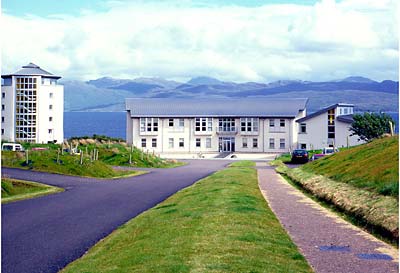
🌍 Where: University of Highlands & Islands (UHI), Sabhal Mòr Ostaig, Skye, & UHI Inverness, Scotland

📅 Dates: 15 – 27 August 2022 📅

👉 Click here for more info 👈

❗️ Application deadline: 7th June – apply here ❗️

Aim of this School: To stimulate the cross-fertilisation of ideas between the communities who work in exoplanetary and solar system dynamics and to understand the latest tools and methods of analysis necessary for research into exoplanets, solar system bodies and planetary systems.

PhD students and early-career/established researchers are welcome to join!

Contact: exoplanet@gcu.ac.uk