Third IAGC International Conference on Water-Rock Interaction & Applied Isotope Geochemistry (16-21 June 2025)

📅 When: 16-21 June 2025
📍 Where: Cagliari, Sardinia
❗ Registration Deadline: 31 December 2024

Get ready for an exciting gathering of global experts and researchers at the Third IAGC International Conference on Water-Rock Interaction (WRI-18) and Applied Isotope Geochemistry (AIG-15). It’s a chance to explore the latest breakthroughs, share ideas, and connect with a worldwide community.

Why attend?
🔹 Network with experts — Build connections and spark collaborations.
🔹 Showcase research — Present your work and explore opportunities for publication.
🔹 Experience Sardinia — A stunning backdrop of beaches, mountains, and rich cultural heritage.

While you’re there, take time to soak in Sardinia’s natural beauty, explore its ancient ruins, and experience its vibrant local traditions.

Check out the event details >>here<< and register online!

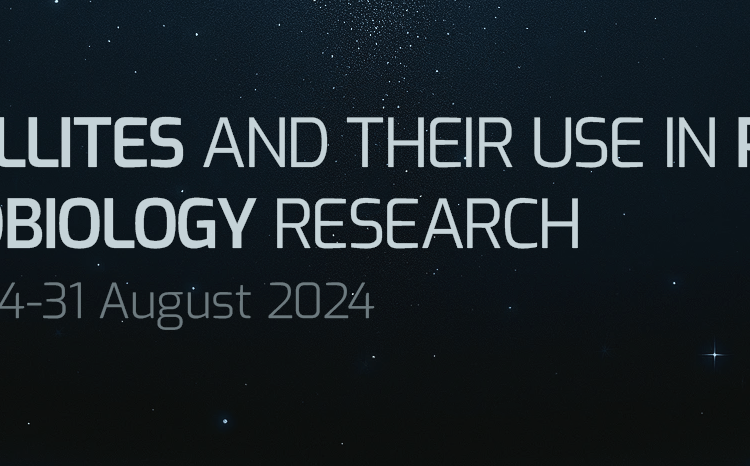
Early Career Workshop: Microsatellites and their use in planetary and astrobiology research (Tartu, Estonia, 24-31 August 2024)

To plan missions involving such small satellites successfully, intensive interaction and cooperation between scientists and space technologists are necessary, which is still lacking in some potential key applications. The workshop school aims to:

  • Highlight the possible potential of microsatellites in exploring different targets like the Moon, small bodies and outer satellites
  • Foster the interaction between space researchers and technologists
  • Allow participants to start the design and planning of new space missions
  • Contribute to the training of a new generation of space researchers

The work on the mission designs will continue after the workshop, thus ensuring a long-term impact.

The European Astrobiology InstituteUniveristy of Tartu and Stockholm University Astrobiology Centre will function as co-organisers of the workshop.

The event is open to applicants from all nationalities. Nevertheless, recommendation letters for visa applications are only issued for participants selected by the organisers.

PLEASE NOTE: A limited number of bursaries for students and early career scientists (up to 8 years from their first PhD in a related field) from EAI institutions (see a list here) will be available. We are also working to get some funding for students and early career scientists from the US. Participants from EAI Institutions selected by the EAI for bursaries will be offered free lunches, excursions, farewell dinner and accommodation in a shared 2-bedded room at Raatuse Hostel from 23 August (arrival) to 1 September 2024 (departure), but have to fund their travel on their own. There is no special application for the bursaries, just send in your application form and tell us in the e-mail. Participants selected for the bursaries will be notified immediately after the application deadline (in good time after the registration deadline).

All information is found on the on the >>website<<

Early Career Workshop: Microsatellites and their use in planetary and astrobiology research (Tartu, Estonia, 24-31 August 2024)

The aim of the workshop will be to enable students and early career scientists to design micro-and nanosatellite missions tackling scientific themes and target objects they have chosen themselves previously. The workshop will consist of three parts:

  • a lectured part consisting of in-depth talks on the scientific background of the chosen mission themes and on important issues in satellite technology
  • a mission designing part where attendees plan these endeavours in detail with the help of satellite technologists
  • a final presentation of all the projects

To plan missions involving such small satellites successfully, intensive interaction and cooperation between scientists and space technologists are necessary, which is still lacking in some potential key applications. The workshop school aims to:

  • Highlight the possible potential of microsatellites in exploring different targets like the Moon, small bodies and outer satellites
  • Foster the interaction between space researchers and technologists
  • Allow participants to start the design and planning of new space missions
  • Contribute to the training of a new generation of space researchers

The work on the mission designs will continue after the workshop, thus ensuring a long-term impact.

The European Astrobiology InstituteUniveristy of Tartu and Stockholm University Astrobiology Centre will function as co-organisers of the workshop.

The workshop will consist of lectures by leading scientists, planning for different micro- or nanosatellite projects in small groups as well as open discussions. Participants will also have the possibility to display their own research results in a poster session. Furthermore, a one-day excursion to South Estonia and a walk around Tartu is included as a social programme.

The event is open to applicants from all nationalities. Nevertheless, recommendation letters for visa applications are only issued for participants selected by the organisers.

PLEASE NOTE: A limited number of bursaries for students and early career scientists (up to 8 years from their first PhD in a related field) from EAI institutions (see a list here) will be available. We are also working to get some funding for students and early career scientists from the US. Participants from EAI Institutions selected by the EAI for bursaries will be offered free lunches, excursions, farewell dinner and accommodation in a shared 2-bedded room at Raatuse Hostel from 23 August (arrival) to 1 September 2024 (departure), but have to fund their travel on their own. There is no special application for the bursaries, just send in your application form and tell us in the e-mail. Participants selected for the bursaries will be notified immediately after the application deadline (in good time after the registration deadline).

>> Application deadline is 1st May 2024 <<

All information is found on the on the >>website<<

Workshop: Earth and Planets Origin and Evolution

Registration and abstract submission are now open for the workshop on the formation and evolution of Earth and of the terrestrial planets, which will take place at the Natural History Museum in Paris on May 13-17, 2024.

>> Deadline for registering: February 15th <<

You can visit the page of the workshop here for more information. 

Summer school Exoplanets by the Lake II: Geoastronomy

Exoplanets by the Lake II: Geoastronomy is a focused summer school on the geosciences of exoplanets at Lake Ammer (Ammersee), July 21—26 2024.

The distinctive features of the summer school include:

  • Emphasis on in-person interaction at an attractive, self-contained venue with at most 20 participants. The number of participants is kept small in order to encourage unrestricted, interactive discussions among exoplanet scientists of all sub-disciplines and seniority.
  • The event will be held for 5.5 days (5 nights). The first 3 weekdays involve pedagogical lectures during the day. There is an optional half-day excursion, via ship on the lake. The last 2 days feature a mini-conference format, where a small number of invited experts share their views and interact with the participants. Participants have the chance to contribute short talks if desired.


The intended audience of this summer school ranges from master students to junior postdocs. Both experts and curious newcomers to the topic are welcome to attend. Senior scientists who are intending to switch research directions and/or attending as active listeners are also welcome.

>> Deadline for registering: March 31st <<

You can visit the page of the school here for more information. 

Nuclear astrochemistry workshop

The first meeting on Nuclear astrochemistry is being held under the auspices of the European Centre for Theoretical Studies in Nuclear Physics and Related Areas (ECT*) in Trento (Italy) from February 26th to March 1st.

This brings meeting together disparate fields of nuclear physics with the rapidly emerging field of astrochemistry to explore the processes of star formation (and death) and planet formation and how they create the conditions that may allow life to evolve and be sustained. In the workshop, the first of its kind, we will bring together leading experts in these fields together with early career researchers who will develop this new field through observations (using JWST), theoretical models and simulations, and laboratory studies (including meteorites) to address the fundamental questions of how the elements and molecules of life are created in the universe and the consequences for the search for life beyond Earth and our solar system.

There’s funding available for both senior and Early Career Researchers (ECRs) to attend the meeting with meals and accommodation included at the ECT  Villa Tambosi in Trento Italy. All ECRs are invited to present a talk at the meeting and participate in discussions leading to future initiatives for interdisciplinary projects.

>> Deadline for registering: January 31st <<

You can visit the page of the school here, and you can contact Prof Nigel Mason for further details. 

1 month left to complete your registration!

The deadline for registering for AbGradE’s 4th Workshop is in a month – August 31st!

Head over >> here << to register.

❗Remember❗: registration is complete only after the payment of the registration fee (details to be given after completing the registration form).

Don´t miss out on the opportunity to discuss science with other early-career scientists!

Workshop: Microsatellites and their use in planetary and astrobiology research

Running in Tartu (Estonia) from the 1st to the 8th of August 2023, this workshop will enable students and early career scientists to design micro- and nanosatellite missions tackling scientific themes and target objects they have chosen themselves previously. The workshop will consist of three parts:

  • a lectured part consisting of in-depth talks on the scientific background of the chosen mission themes and on important issues in satellite technology
  • a mission designing part where attendees plan these endeavours in detail with the help of satellite technologists
  • a final presentation of all the projects

In order to plan missions involving such small satellites successfully, intensive interaction and cooperation between scientists and space technologists are necessary, which is still lacking in some potential key applications. The workshop school aims to:

  • Highlight the possible potential of microsatellites in exploring different targets like the Moon, small bodies and outer satellites
  • Foster the interaction between space researchers and technologists
  • Allow participants to start the design and planning of new space missions
  • Contribute to the training of a new generation of space researchers

The work on the mission designs will continue after the workshop, thus ensuring a long-term impact.

The European Astrobiology Institute, University of Tartu and Stockholm University Astrobiology Centre will function as co-organisers of the workshop.

The workshop will consist of lectures by leading scientists, planning for different micro- or nanosatellite projects in small groups, as well as open discussions. Participants will also have the possibility to display their own research results in a poster session. Furthermore, a one-day excursion to South Estonia and a walk around Tartu are included as a social programme.

For further information, please check the website.